
Four Nigerian Ports Set for Major Upgrade as FG Gives Approval
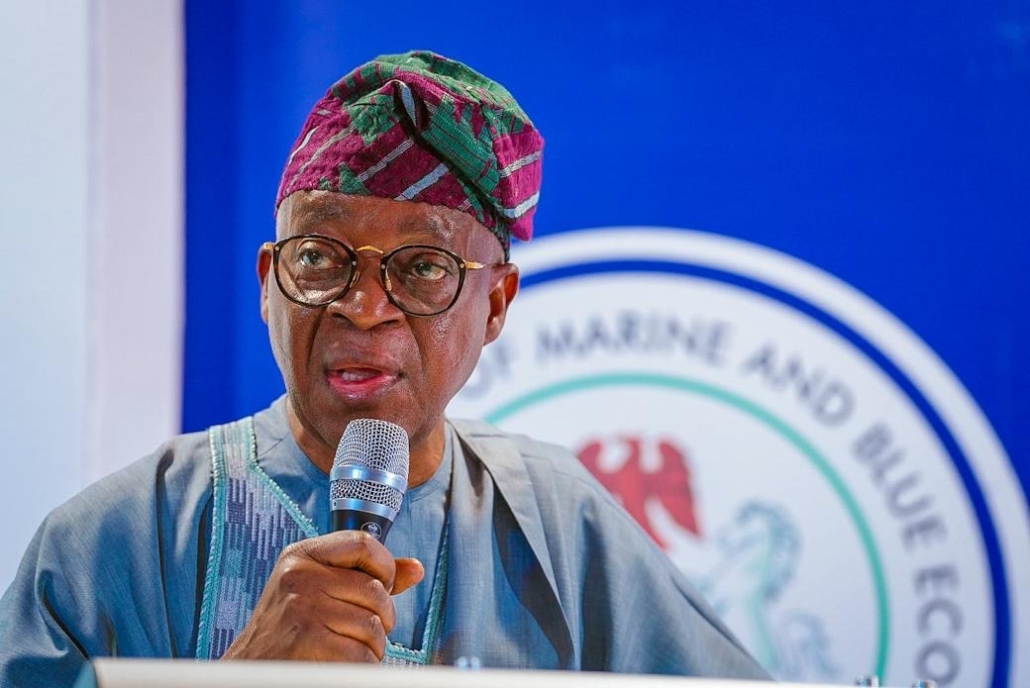
The Minister of Marine and Blue Economy, Adegboyega Oyetola, announced on Sunday that the Federal Government has approved the modernization of four additional ports. This approval follows an earlier decision to upgrade Apapa and Tin Can Island ports in Lagos.
The move is expected to expand Nigeria’s port infrastructure, provide alternative gateways for importers and exporters, and improve cargo movement efficiency across different regions of the country.
Oyetola explained that extending the modernization program beyond Lagos would help ease the concentration of cargo traffic around Nigeria’s busiest commercial hub by creating additional efficient gateways for international trade.
He noted that improved infrastructure and operational efficiency at the four ports would enhance cargo handling, reduce vessel turnaround times, strengthen regional connectivity, and make the movement of goods more predictable and cost-effective.
“This approval marks another important step in our determination to transform Nigeria’s maritime infrastructure and unlock the enormous economic potential of our ports,” the minister said.
The port expansion strategy is part of a broader effort to increase maritime capacity and position the sector as a stronger contributor to trade, investment, and economic growth.
In addition to rehabilitating existing ports, the Federal Government has approved the development of several new deep-sea ports, including the Ibom Deep Seaport in Akwa Ibom, the Bakassi Deep Seaport in Cross River, the Agge Deep Seaport in Bayelsa, the Gateway Deep Seaport in Ogun, the Ondo Deep Seaport in Ondo, and the Bonny Deep Seaport in Rivers State.
According to Oyetola, combining upgraded existing ports with new deep-sea facilities would provide greater capacity to accommodate rising trade volumes and support the emergence of stronger economic corridors across the country.
“Our approach is comprehensive. We are modernizing existing ports while facilitating the development of new deep-sea ports. This will give Nigeria greater capacity to handle increasing volumes of trade, attract investment, and position our country as a major maritime and logistics hub in Africa,” he said.
The minister also revealed that the federal government plans to develop an integrated maritime and logistics network linking seaports with roads, railways, and inland waterways.
Such integration, he said, would facilitate seamless cargo evacuation, reduce logistics costs, and improve supply chain predictability for Nigerian businesses.
“Our ambition is to build a port system that is efficient, transparent, and globally competitive. We want Nigerian businesses to spend less time and resources moving their goods while creating an environment that encourages investment and supports job creation,” Oyetola said.
He added that the ministry would work with state governments, terminal operators, investors, shipping companies, and other stakeholders to ensure that the various port projects translate into improved maritime services and wider economic opportunities.

Leave a Reply
Want to join the discussion?Feel free to contribute!